"Whatever you do, do it all for the glory of God."
1 Corinthians 10:31
Bible Coloring Blog
Practical, original guides for parents, teachers, and caregivers who want to use Scripture coloring as a thoughtful conversation activity.
Educational Benefits of Coloring
Coloring is not a replacement for play, conversation, reading, or hands-on teaching. It is one accessible way to give children time to practice choices, describe ideas, and connect a page to a larger lesson. The articles below explain how families, teachers, and Sunday-school leaders can use coloring with intention.
1. Fine-motor practice without pressure
Holding a crayon, changing direction, choosing a tool, and controlling pressure give young children repeated practice with small hand movements. Invite children to try thick crayons, triangular pencils, or larger page areas when they need an easier starting point. The goal is active practice, not staying perfectly inside every line.
2. A natural language prompt
A finished page creates something a child can point to and explain. Ask, “Why did you choose that color?” or “Which word on this page stands out to you?” These open questions turn a quiet activity into a short conversation about vocabulary, feelings, Scripture, and personal connections.
3. Attention through a clear routine
A short read-talk-color-reflect routine gives children a predictable beginning and ending. Read one verse, name one idea, color for ten minutes, and invite the child to share one observation. Short sessions can be adjusted for age, energy, vision, and motor needs.
4. Process over perfection
Children learn more when they can make meaningful choices rather than copy an adult’s “correct” version. Offer a small selection of tools, accept unusual color choices, and talk about the process. This keeps coloring creative while still connecting it to a Bible lesson or family value.
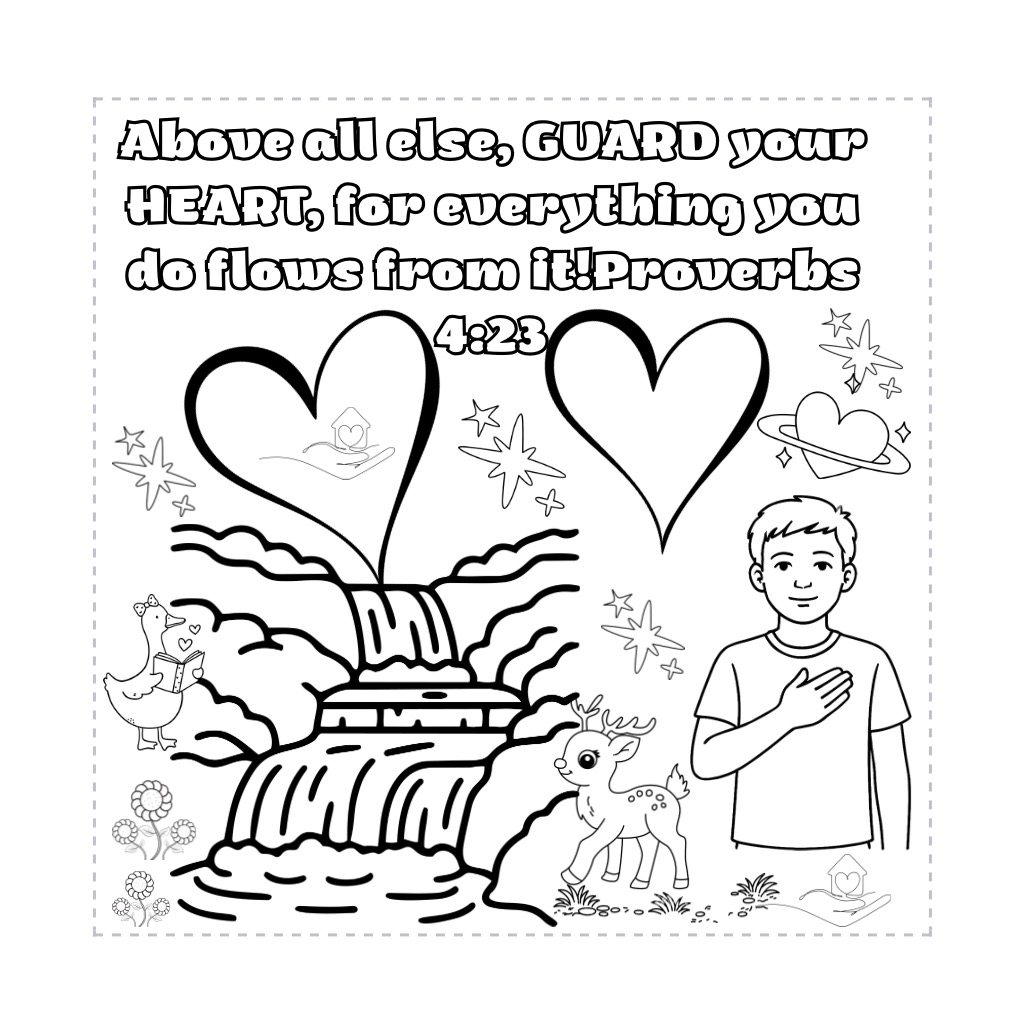
Try a page from our Bible coloring collection with your family, class, or Sunday-school group. Print it at home and use the verse as a gentle conversation starter about wisdom, choices, and guarding the heart.
How to Lead a 15-Minute Bible Coloring Conversation
By Dadya C.P. · Updated September 2026 · For parents and caregivers
A coloring page works best when it gives a child something to notice and talk about. You do not need a long lesson or a perfect craft. A short, repeatable routine can make Scripture time feel welcoming and manageable.
Step 1: Read before you explain
Read the verse or passage slowly. If the wording may be unfamiliar, explain one word in plain language and avoid turning the first minute into a quiz. Let the child look at the page and decide what catches their attention.
Step 2: Ask one open question
Choose a question with more than one reasonable answer: “What do you notice first?” “Which word would you like to remember?” or “What kind choice could connect with this message?” Listen before adding your own interpretation.
Step 3: Let the art remain the child’s
Offer a few materials and allow unusual color choices. The goal is not to reproduce an adult example. While the child works, you can reread the verse, name shapes, or sit quietly. End by inviting the child to describe one part of the page.
This routine is a conversation method, not a developmental treatment or a guarantee of learning. Adjust the time, language, and materials to the child in front of you.
Planning a 30-Minute Sunday-School Coloring Activity
By Dadya C.P. · Updated September 2026 · For teachers and group leaders
A group activity needs a clear beginning, a flexible middle, and an easy ending. The plan below is designed to leave room for different ages, attention spans, and ways of participating.
Before the children arrive
Choose one verse or theme, preview the page, and print a few extras. Put crayons or pencils where children can reach them. If your setting has allergy, safeguarding, accessibility, or sharing rules, follow those rules first.
A simple timing plan
Minutes 0–5: welcome the group, introduce the verse, and explain one key word.
Minutes 5–10: invite children to identify a detail in the picture or repeat a short phrase.
Minutes 10–25: color, draw, or write while the teacher circulates and asks optional questions.
Minutes 25–30: invite volunteers to share an observation and close by revisiting the verse.
Make sharing safe and optional
Do not require children to disclose personal problems or defend their artwork. A child may participate by listening, choosing a color, or taking the page home. The activity should support the lesson, not replace the relationship and teaching around it.
By Dadya C.P. · Updated September 2026 · For families and educators
Short wisdom passages can be easier to revisit when they are connected to ordinary moments. A coloring page can help a child remember the theme, but the conversation should stay concrete and respectful rather than becoming a character judgment.
Translate the idea into a situation
After reading a proverb, describe a simple situation from school, home, or a friendship. Ask what different choices might look like. Keep the example hypothetical unless the child volunteers a personal connection.
Use language that invites reflection
Questions such as “What might kindness sound like here?” or “What could someone do next?” are more useful than “Did you obey the verse?” They help children practice applying an idea without suggesting that one worksheet can measure faith or character.
Revisit rather than repeat
Place finished pages in a folder, add the date, and return to one later. Ask whether the child sees anything new. This creates a gentle record of conversation without grading the artwork.
The value of the activity comes from the adult’s presence, the quality of the question, and the child’s freedom to respond in their own words.
Building a Calm, Faith-Centered Home Learning Rhythm
By Dadya C.P. · Updated September 2026 · For parents and homeschool families
Families do not need a large curriculum to create a meaningful creative rhythm. One page can sit beside reading, handwriting, a family Bible lesson, or a quiet afternoon. Consistency matters more than making every session elaborate.
Choose a realistic place and time
Use a well-lit surface where materials can be put away easily. A ten-minute routine after breakfast may work better than a weekly project that requires extensive preparation. Keep a folder nearby for finished pages and notes.
Pair the page with one literacy task
Ask the child to circle a key word, copy a short phrase, dictate a sentence, or draw a symbol that represents the message. Older children can paraphrase the verse or write one example of how the idea could be practiced.
Protect the child’s agency
Offer choices about tools, order, and whether to talk while coloring. If the child is not ready, pause and try another day. A faith-centered home should make room for curiosity, disagreement, quiet, and different learning preferences.
Our resource hub includes age-specific ideas, and the activity-plans page provides a compact routine you can print for reference.
What Bible Coloring Activities Can—and Cannot—Do
By Dadya C.P. · Updated September 2026 · Editorial note
It is easy for activity pages to be described with promises they cannot support. We use a narrower and more honest description: Bible coloring is a creative way to spend time with a verse, practice making artistic choices, and open a conversation with a trusted adult.
What the activity can offer
A page can give a child a visible reminder of a passage, a reason to explain an idea, and a structured way to participate in a lesson. It can also help a teacher or parent notice what interests the child. These are possibilities, not guaranteed outcomes.
What it does not replace
Coloring is not therapy, clinical care, formal assessment, or a substitute for reading instruction, special-education support, medical advice, or pastoral care. If a child needs professional help, contact an appropriately qualified local professional.
Our editorial standard
We prefer specific routines, transparent limits, and questions that respect children. We avoid fabricated reviews, guaranteed results, and claims that a coloring page can solve emotional, developmental, or spiritual problems on its own. Learn more on About Us.
We use essential storage to remember your choice. With your permission, Google may use advertising cookies to show more relevant ads. Read our before choosing.
Privacy & Cookie Policy
We use essential storage to remember your cookie choice and keep the website working. If you accept advertising cookies, Google may use information about your visit to personalize ads and measure performance.
You can continue without personalized advertising, reopen Cookie settings at any time, or read the full Privacy & Cookie Policy.